Vehicle Safety Manuals & Rules | The Freedom Masons
Project 02 / Standards & Compliance / Government Program

The complete safety framework behind a provincial inspection system.

A provincial transport authority had no written vehicle inspection rules. Officers relied on experience, not checklists. We wrote the complete safety manuals, inspection procedures, and enforcement standards from the ground up.

Safety Standards Vehicle Inspection Compliance Framework
Client
A provincial transport authority
Sector
Government · Road safety
Scope
Safety manuals + inspection rules
Our role
Technical author & standards consultant
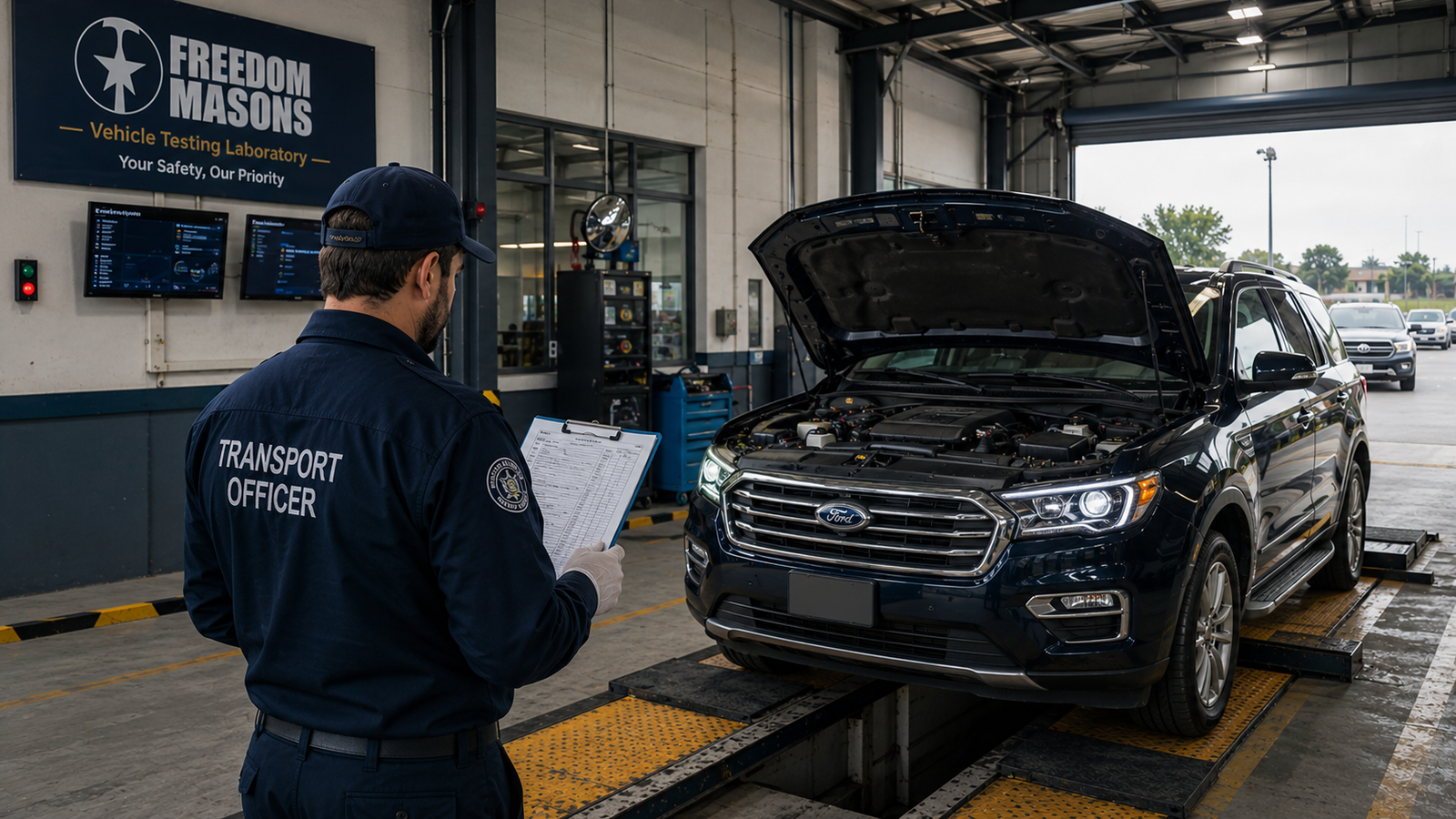
Vehicle safety inspection documents and checklists
The Project

No written rules. Every vehicle on the road uninspected.

A provincial transport authority, responsible for registering and clearing vehicles across its jurisdiction, had no written inspection rules. Officers relied on personal judgment and verbal tradition. Two inspectors could look at the same vehicle and reach different conclusions.

The authority needed a single, enforceable standard: what makes a vehicle safe, how to prove it, and what to do when it fails. We wrote the complete framework from the ground up, because no one had written it before.

The manuals covered every vehicle category in the province: motorcycles, cars, buses, trucks, auto-rickshaws, and trailers. Each category got its own inspection checklist, pass-fail criteria, and enforcement procedure.

The result: a complete standards set that officers can enforce consistently, courts can reference, and workshops can build against. Written in plain language, checked against international practice, and built for local roads.

What was going wrong

Vehicle inspections were carried out without written rules. Officers used personal experience, not documented standards. This meant inconsistent enforcement, disputed rulings, and unsafe vehicles passing through.

There was no single document an officer could open, read, and apply. No checklist. No criteria. No appeal process. The system ran on memory, and memory varies.

How we built it

We started by mapping every vehicle category on the province's roads. Then we wrote inspection checklists for each one: what to check, how to check it, and what counts as a pass or fail.

Every procedure was written in plain language, reviewed by legal and engineering teams, and tested with real inspectors before final delivery.

Where it landed

The authority received a complete set of safety manuals, inspection checklists, and enforcement guidelines. Officers now work from the same document, and courts can reference it in disputes.

Workshops know exactly what standard they must meet. Drivers know what will be checked. And the authority has a system it can update, enforce, and defend.

Our Method

How the work ran

The same five stages we run on every engagement, applied here. Hover or tap a stage to see what it covered.

01Scope the Decision
02Set the Standard of Proof
03Test the Evidence
04Challenge the Answer
05Deliver the Verdict
01
Scope the Decision What must the authority be able to enforce, and what evidence would make it enforceable? The question was fixed before any drafting began.
What the authority got

The deliverables, built to be enforced

Every item below was written to be used by the inspectors who check vehicles and the officials who enforce against failures, not to sit in a file.

  • Vehicle safety manuals covering all categories on provincial roads
  • Inspection checklists with pass-fail criteria for each vehicle type
  • Enforcement guidelines for officers and legal teams
  • Workshop compliance standards for repair and certification centers
  • Training materials for inspector onboarding and refresher courses

What it added up to

What this engagement put in place, and the evidence base behind the team that delivered it.

0 complete safety framework delivered from scratch
0 vehicle categories covered: bikes, cars, buses, trucks, rickshaws, trailers
0 inspection checkpoints defined across all vehicle types
0 training modules delivered for inspector onboarding
0 written inspection rules existed before we started
0 months from first draft to final standards delivery

Facing a decision like this?

Tell us the decision you face. A senior engineer will review it and reply within two business days. If we are not the right firm for it, we will say so.

Every inquiry is reviewed by a senior engineer. Response within 2 business days.

>