National Engine & Fuel Testing Program | The Freedom Masons
Project 03 / Testing & Analysis / Government Program

Real fuel data where none existed before.

A national fuel authority was writing policy for millions of vehicles without knowing what those engines actually consumed. We designed and ran a national testing program across motorcycles, rickshaws, and cars to give them data they could not get anywhere else.

Fuel Testing Engine Analysis Policy Data
Client
National Fuel Standards Board
Sector
Government · Fuel regulation
Scope
Field testing + policy data
Our role
Technical lead & data analyst
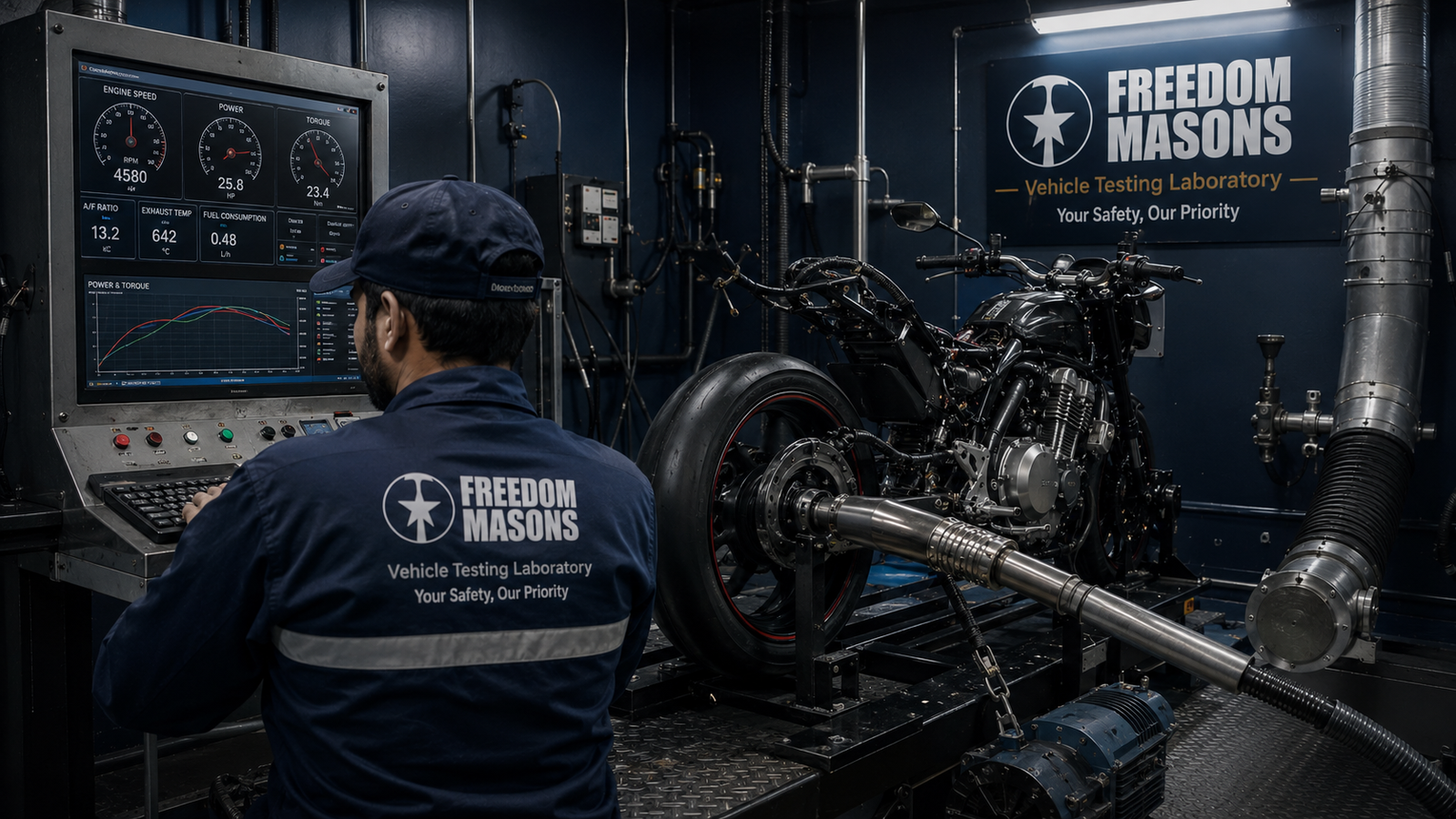
Engine testing equipment and fuel measurement devices
The Project

Policy written in the dark. Millions of engines unmeasured.

A national fuel authority was responsible for setting fuel quality standards, emission limits, and import regulations for every vehicle on the country's roads. But they had no data on what those engines actually consumed, emitted, or produced under real driving conditions.

Manufacturers quoted laboratory figures. Importers submitted foreign test reports. But no one had tested the actual fleet on local fuel, local roads, and in local traffic. Policy was being written with assumptions, not evidence.

We designed a national testing program that measured fuel consumption, emissions, power output, and efficiency across motorcycles, auto-rickshaws, and small cars on the roads where they actually operate.

The result: a complete data set the authority used to set national fuel policy, update import regulations, and enforce emission standards for the first time based on measured proof.

What was going wrong

The national fuel authority set standards for every vehicle in the country, but had no measured data on what those engines consumed or emitted in real conditions. Policy relied on manufacturer claims and foreign test reports.

Local fuel quality, traffic patterns, and vehicle age all affected performance. None of these were captured in the data the authority held. It was regulating a fleet it did not understand.

How we built it

We designed a testing protocol for motorcycles, auto-rickshaws, and small cars, then ran it across multiple cities on local fuel and in real traffic. Every test measured fuel consumption, emissions, and power output under standardized conditions.

The data was checked for consistency, mapped to vehicle categories, and compared against manufacturer claims. Where claims and reality diverged, we documented the gap.

Where it landed

The authority received a complete national data set on its actual fleet: what engines consume, what they emit, and how efficiency varies by vehicle type, age, and operating condition.

That data became the foundation for updated fuel standards, revised import regulations, and the first emission enforcement program based on measured evidence rather than manufacturer paperwork.

Our Method

How the work ran

The same five stages we run on every engagement, applied here. Hover or tap a stage to see what it covered.

01Scope the Decision
02Set the Standard of Proof
03Test the Evidence
04Challenge the Answer
05Deliver the Verdict
01
Scope the Decision What data does the authority need to set fuel policy, and what evidence would survive a court challenge or a parliamentary question? We fixed the question before touching any equipment.
What the authority got

The deliverables, built to be enforced

Every item below was written to be used by the policy team that sets standards and the enforcement team that defends them, not to sit in a file.

  • Complete fuel consumption data set across three vehicle categories
  • Emission profiles for motorcycles, rickshaws, and small cars on local fuel
  • Power and efficiency benchmarks measured in real traffic conditions
  • Comparison reports: manufacturer claims vs. measured reality
  • Policy recommendations with evidence base for fuel standards and import rules

What it added up to

What this engagement put in place, and the evidence base behind the team that delivered it.

0 vehicle categories tested: motorcycles, auto-rickshaws, and small cars
0 national fuel policy informed by real measured data
0 engines tested in field conditions across multiple cities
0 test parameters measured per vehicle: fuel, emissions, power, efficiency
0 prior national fuel consumption databases existed before we started
0 months from protocol design to final policy data delivery

Facing a decision like this?

Tell us the decision you face. A senior engineer will review it and reply within two business days. If we are not the right firm for it, we will say so.

Every inquiry is reviewed by a senior engineer. Response within 2 business days.